January Is Cervical Cancer Awareness Month: Why HPV Screening Matters in Sperm Donation
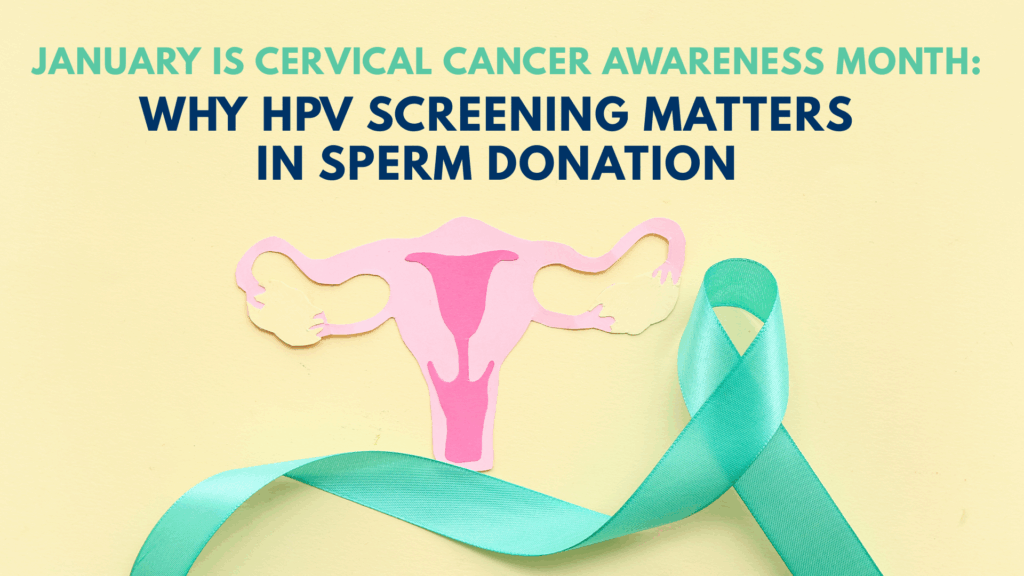
January is Cervical Cancer Awareness Month, a time dedicated to education, prevention, and early detection of a largely preventable disease through screening, vaccination, and care. While cervical cancer is often discussed in the context of women’s health, this month also presents an important opportunity to talk about why HPV matters in sperm donation.
Human papillomavirus (HPV) is the most common sexually transmitted infection worldwide, and persistent infection with high-risk HPV types is responsible for nearly all cases of cervical cancer. What many people don’t realize is that HPV can also be transmitted through donor sperm, even when there is no physical contact between donor and recipient. Understanding how HPV intersects with sperm donation is essential for protecting both intended parents and future children.
Understanding Cervical Cancer and Its Link to HPV
Cervical cancer develops when abnormal cells in the cervix grow uncontrollably, often over many years. According to MedlinePlus’s overview of cervical cancer, regular screening and early intervention can catch precancerous changes before they become life-threatening. That’s why public health efforts emphasize routine Pap tests, HPV testing, and vaccination.
The connection between HPV and cervical cancer is well established. High-risk strains, particularly types 16 and 18, can interfere with normal cell function and lead to malignant changes over time. The National Cancer Institute’s detailed explanation of HPV and cancer explains that while most HPV infections resolve on their own, persistent infections with high-risk types pose the greatest risk.
This makes prevention especially critical in all pathways to pregnancy, including assisted reproduction.
How HPV Can Be Transmitted Through Donor Sperm
HPV is often thought of as something transmitted through skin-to-skin sexual contact. However, research has shown that HPV can be present in semen. If a sperm donor becomes infected with HPV, the virus can be transmitted to a recipient during insemination, even if the recipient never has direct contact with the donor himself.
This matters because HPV infection in the recipient can lead to cervical changes over time. If infection occurs during pregnancy, there is also a risk of HPV transmission to the infant during birth or shortly afterward. These risks underscore why screening protocols in sperm donation are so important, particularly for those building families through donor conception.
HPV’s Impact on Sperm Quality and Fertility
Beyond transmission risks, HPV can directly affect sperm health. Scientific research has shown that high-risk HPV types can impair sperm quality by causing DNA damage and oxidative stress. This can lead to lower sperm counts, reduced motility (movement), and abnormal morphology (shape), all of which may negatively affect fertility and assisted reproduction outcomes.
A foundational study available through PubMed Central outlines how viral infections, including HPV, can disrupt normal sperm function and increase sperm cell death. For individuals relying on donor sperm, this highlights the importance of rigorous screening not just for safety, but also for reproductive success.
What the FDA Requires And What It Doesn’t
In the United States, the FDA requires sperm banks to screen donors for HPV through physical examinations and comprehensive medical and sexual histories. Medical professionals look for visible signs of HPV and assess risk factors that may suggest a current or past infection.
However, the FDA does not require DNA-based testing of semen for HPV. This means that while donors may appear asymptomatic and report no known infections, HPV can still be present at the cellular level in sperm samples.
This regulatory gap is where sperm banks can differ significantly in their approach to donor safety.
Why DNA-Based HPV Testing Sets a Higher Standard
Some sperm banks go beyond FDA requirements by incorporating advanced testing methods. Fairfax Cryobank, for example, performs DNA-based HPV testing on donor semen in addition to FDA-mandated screening protocols. Their process involves testing semen samples every three months to increase the likelihood of detecting new infections as early as possible.
Through DNA testing, Fairfax Cryobank screens for the two HPV strains most frequently associated with cervical cancer. This additional layer of testing reflects a proactive commitment to recipient safety and long-term health. You can learn more about this approach in their article on why HPV testing is important for sperm donors, which explains how advanced screening can reduce risks associated with donor conception.
For those considering donor sperm, understanding these differences can be critical to informed decision-making.
Common Questions About HPV and Donor Sperm
Given how common HPV is, it’s natural for intended parents to have questions. What happens if a donor tests positive? How often are donors screened? What strains are tested? Addressing these concerns openly helps reduce anxiety and empowers recipients to feel confident in their choices.
Fairfax Cryobank addresses many of these concerns in its comprehensive HPV FAQs, offering clarity around testing methods, donor eligibility, and ongoing monitoring.
Cervical Cancer Awareness Month: A Reminder of Prevention’s Power
Cervical Cancer Awareness Month is ultimately about prevention through vaccination, routine screening, and informed healthcare decisions. When nearly all cervical cancers are linked to HPV, reducing exposure wherever possible becomes an essential part of reproductive health.
For those using donor sperm, choosing a sperm bank that prioritizes advanced HPV screening can be one meaningful way to minimize risk. Combined with regular cervical screenings and HPV vaccination when appropriate, these measures contribute to a safer, more informed path to parenthood.
January serves as a reminder that cervical cancer prevention impacts everyone (not just women) and is a shared responsibility that extends to donors, healthcare providers, and the systems that support family building. By understanding how HPV intersects with sperm donation, intended parents can take another step toward protecting their health and the health of the families they are working so hard to create.