Fibroids and Fertility: Understanding the Impact for Intended Parents Using Donor Sperm
July is Fibroid Awareness Month, a time dedicated to education, advocacy, and support for individuals living with uterine fibroids, a condition that affects the majority of women by age 50.
While they are often benign and symptom-free, they can significantly impact fertility for some. For those pursuing family-building through donor sperm, understanding the role fibroids may play in conception is essential.
Whether you’re just beginning your journey or exploring fertility treatment options, this guide will help you understand how fibroids affect reproductive health and what pathways forward are available.
What Are Fibroids?
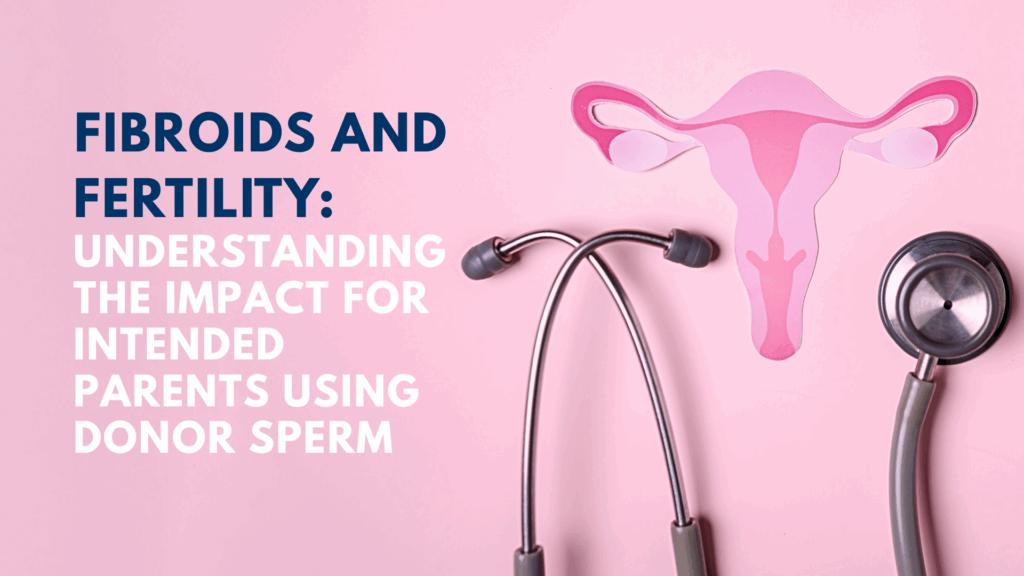
Uterine fibroids, also known as leiomyomas or myomas, are noncancerous growths that develop in or around the uterus. These tumors can range in size from barely noticeable to large enough to cause abdominal discomfort. They may grow within the uterine wall, protrude into the uterine cavity, or extend outward from the uterus.
While many people with them experience no symptoms, others may deal with heavy or prolonged menstrual bleeding, pelvic pain or pressure, and, in some cases, difficulty conceiving. Fibroids are hormonally driven, typically growing during the reproductive years due to estrogen and progesterone.
They also disproportionately affect Black women, who tend to develop fibroids at a younger age and with more severe symptoms than others. According to the National Institutes of Health, this disparity underscores the need to increase awareness, improve diagnosis, and enhance access to treatment.
Can Fibroids Affect Fertility?
Yes, but the impact depends on the size, location, and number of fibroids.
Some individuals with them experience no fertility issues at all. Others may face challenges due to fibroids that alter the shape of the uterus, obstruct the fallopian tubes, interfere with embryo implantation, or cause uterine inflammation.
One type of fibroid, known as a submucosal fibroid, grows within the uterine cavity and is particularly associated with infertility. A 2021 study published in Human Reproduction found that women with submucosal fibroids were significantly less likely to conceive naturally than those without fibroids. In some cases, fibroids can also be linked to early pregnancy loss or complications during gestation.
Because fibroids can sometimes go unnoticed, especially if they don’t cause pain, it’s important to talk to your healthcare provider if you’ve been trying to conceive for a while without success. A transvaginal ultrasound or MRI can help detect fibroids and determine whether they may be contributing to infertility.
Treatment Options For Fibroids That Support Future Parenthood
When fibroids are confirmed to be impacting fertility, a variety of treatment options are available, and many are compatible with the goal of building a family using donor sperm.
The most common approach is a myomectomy, a surgical procedure that removes fibroids while preserving the uterus. This can be performed via hysteroscopy, laparoscopy, or traditional abdominal surgery, depending on the location and number of fibroids.
In some cases, hormonal therapy may be recommended to shrink fibroids temporarily, though this is often a short-term solution. Another option is uterine artery embolization, which reduces blood flow to fibroids, causing them to shrink. However, this procedure is not usually recommended for those still planning to conceive, as it can potentially affect the uterus or ovaries.
If you’re considering treatment and trying to build a family, consult a reproductive endocrinologist or fertility specialist to create a care plan that keeps your goals at the forefront.
How Donor Sperm Can Help Build Your Family
For individuals navigating fibroid-related infertility, or for those who may not have a partner who produces sperm, donor sperm offers a hopeful, viable path to parenthood.
We support people of all backgrounds, including those with complex medical histories, single parents by choice, and LGBTQ+ families. Whether you’re pursuing home insemination, intrauterine insemination (IUI) or in vitro fertilization (IVF), having access to high-quality, thoroughly screened donor sperm can play a key role in your reproductive success.
Each of our donors undergoes rigorous genetic and medical screening to ensure quality and safety. We also offer ID donor options for families who want their child to have the opportunity to connect with the donor in the future. And because we understand the importance of personal choice, our searchable donor database enables you to filter by physical characteristics, ethnic background, education, personality, and more. You can read more about how to choose a sperm donor here.
Resources and Support for the Journey Ahead
Managing fibroids while trying to conceive can be emotionally and physically taxing, but it’s important to know you’re not alone. Several advocacy groups and medical organizations offer excellent information and community support:
At Fairfax Cryobank, we provide compassionate care and guidance at every stage of your family-building journey. Whether you’re seeking fertility preservation or exploring donor options, our experienced team is here to support you.
We’re With You Every Step of the Way
Fibroid Awareness Month reminds us how deeply reproductive health issues can affect people’s lives. If fibroids are part of your story and you’re considering donor sperm to help build your family, know that you are supported, and that parenthood is still within reach.